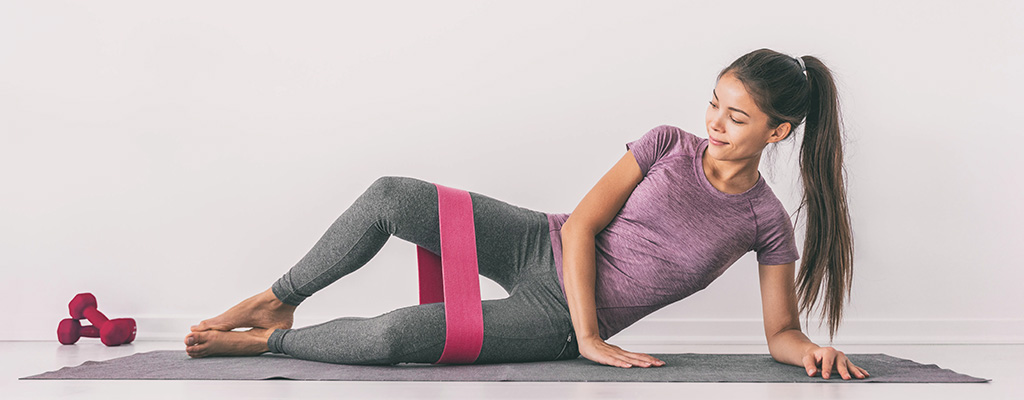
Does Stress Cause Neck Pain?
Does stress cause neck pain? The short answer is no! At COAST Physical Therapy Specialists, we like to say “contributes to” instead of “causes.” The casual way healthcare professionals throw around terms can lead to confusion and, worse still, ineffective treatment. Fortunately, our highly skilled therapists know how to dig deep and find the root cause of your neck pain, and this information helps you find relief!
Let’s discuss Nicole, a 40-something-year-old working mother of three. Nicole was used to being very active, balancing her work schedule with getting her kids to all the various activities and school functions that come with being a mom nowadays.
Her neck pain first started as a crick in the neck when she woke up one morning. As the day progressed from driving her kids around to sitting at her desk, she noticed that turning her head became more difficult and painful, making focusing on work nearly impossible.
Nicole struggled to figure out why her neck started hurting and came to the conclusion that stress “must be” the culprit. The more pain and difficulty moving she had, the more convinced she was that stress was to blame.
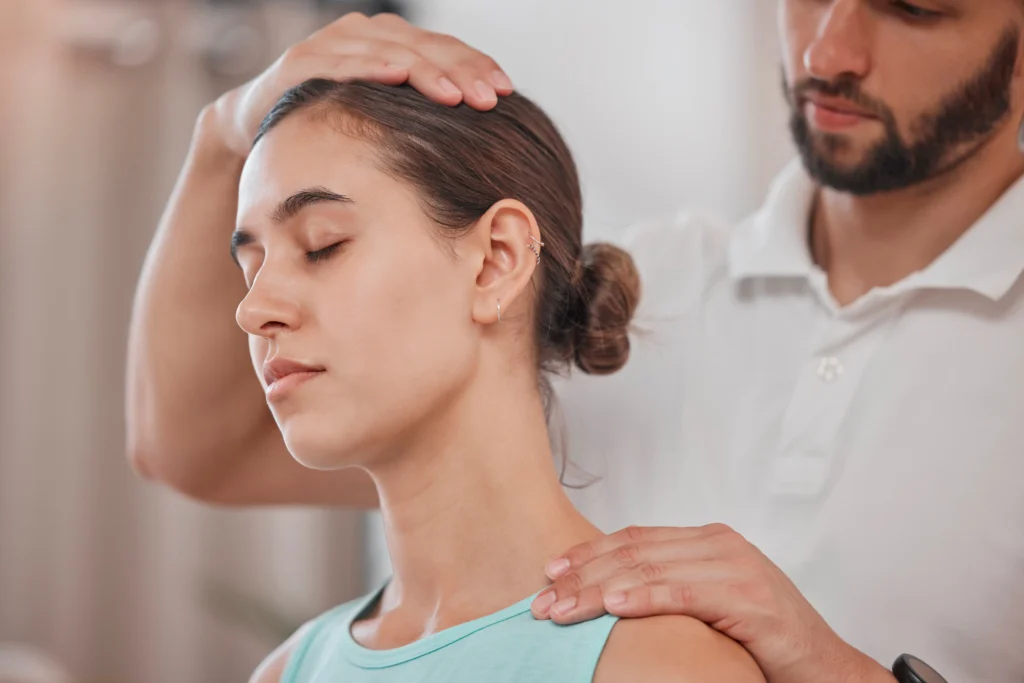
Understanding Nicole’s Neck Pain
One of the most common things we hear from our patients is that their pain started for “no apparent reason.” Like Nicole, people will wake up with a crick in their neck or notice a stiffness turning when driving in the car. It is also common for people to notice tightness in their upper back and neck after a long day.
So, what is actually the source of the pain? In most cases, there is an issue with the neck joints or the neck muscles due to prolonged positions. Our neck joints don’t like remaining in any position for extended periods. In Nicole’s case, she first noticed her pain in the morning, which may have been related to her neck position while sleeping. It is also important to note that in Nicole’s case, the first sign of any issue was in the morning when she woke up, unrelated to stress.
As Nicole’s day progressed, her pain got worse. But this also was more likely related to how she held her neck while driving or sitting at her computer. In both cases, her posture, specifically how she held her neck, seems to have contributed to her pain. Prolonged sitting can lead to a forward head position, resulting in tension to soft tissue (i.e., muscles, tendons, and ligaments) or negative changes to our blood flow.
The muscles of our neck function best when we move them. So, holding her head in one position likely led to irritation of the muscles and affected her ability to move her neck, which in turn caused stress.
Stress “contributes” to neck pain because, when we experience stress, our bodies naturally respond by tensing up as a protective measure. This tension can lead to discomfort, particularly in the neck and upper back region. Research studies have found that individuals with higher stress levels reported increased neck pain as compared to those with lower stress levels. This is why we say “contributes” to, but not the cause of, neck pain.
How Physical Therapy Can Help Alleviate Neck Pain
We will target the source of your pain by performing a thorough examination, starting with your medical history and details about how, when, and where your symptoms began. As we saw with Nicole, determining how, when, and why the pain started helps us eliminate possibilities and get to the actual root cause(s).
Our therapists will also analyze your posture and movement to identify any limitations or restrictions contributing to your condition. We’ll use this information to design a program that addresses your specific needs.
Our treatment plans focus on relieving your pain and improving your posture, mobility, strength, etc., and educating you about managing your symptoms. Your program will likely include manual therapy (i.e., soft tissue work and/or joint mobilizations), targeted stretches, exercises, activity modification, or posture recommendations.
We’ll listen to your unique situation and specific issues and then work to help you find relief and get back to your normal routine.
Book Your Appointment Today!
If you’re dealing with neck pain or looking for someone to help you figure out what is causing your issues, call us today and set up a consultation!
Separating Muscle and Joint Pain:
The Key to Lasting Results
Do you notice tightness in your upper back and neck? Is it more tight on one side than on the other? The location and characteristics of your neck pain are valuable clues for our skilled McKenzie trained therapists at COAST Physical Therapy Specialists to identify the likely culprit for your pain, which helps us guide you to lasting relief. Ready to unlock the secret to lasting relief from neck and upper back pain? Don’t ignore those subtle signs — reach out to our skilled physical therapists today, and let us help you resolve your pain once and for all!
Neck Pain — Muscle vs. Joint
It can be difficult for people to determine where their pain originates. One of the most common reasons people describe their pain is “no apparent reason.” It often seems to come out of the blue or while doing the same everyday things you usually do.
You can use these clues to point you in the right direction:
- Pain on one side = joint pain. Although this, and all other clues, is not 100% true, it is a good starting point. Muscle tension tends to be on both sides of the neck and equally distributed, whereas joint pain is typically one-sided.
- Difficulty or inability to turn = joint dysfunction. Muscle tension tends to make movement uncomfortable or to feel tight on the opposite side of where you’re turning towards (pain on the left when turning right). Joint dysfunction usually causes the inability to turn or the sensation of a blockage when turning to the same side as the pain (pain on the right when turning right).
- Pain that travels = joint. Muscles tend to feel tight and sore in the muscles themselves, compared to joint pain, which travels from the source of pain up into the head or down into the shoulder blade or upper shoulder area.
These clues can help us determine what is causing your pain, but the best way to get lasting relief is to schedule an appointment with one of our McKenzie therapists!

🧠 Muscle or Joint Pain Challenge
Can you tell the difference between muscle tension and joint dysfunction?
Neck and upper back pain can feel confusing — but your symptoms often provide important clues. Test your knowledge and learn how skilled McKenzie-trained therapists identify the real source of pain for lasting relief.
Why Hitting the Beach Is More than Just Fun in the Sun
Planning a beach trip this summer? You’d be surprised how much exercise you can get during a beach vacation. In between building sand castles and napping in the sun, try these fun health-boosting beach activities:
- Walk on the sand: While walking is an excellent exercise in and of itself, doing so on a sandy beach has additional benefits. The sand provides resistance that can help build strength in the muscles of your lower body.
- Splash in the waves: Make sure to spend time in the water, even if you aren’t swimming. Water’s density means your muscles have to work harder to perform simple movements, making ocean time a great workout.
- Relax in the breeze: Spending time in nature can help you relax and destress, which can actually impact your physical health, too! Take a few moments to breathe deeply and enjoy the sights, sounds, and scents of your surroundings–particularly before it gets crowded!
Want to ensure you’re injury-free and ready to make the most of your time on the beach? Schedule an appointment with COAST Physical Therapy Specialists today!

Exercise Tip of the Month
Threading the Needle
Stretch Tracker
Meet Our Team




Mediterranean Chickpea Quinoa Bowl
Packed with plant-based protein, fiber, and colorful veggies, this Mediterranean-inspired quinoa bowl is a fresh and energizing meal perfect for busy weekdays or light summer dinners.
Ingredients
- 1 cup uncooked quinoa
- 1 can chickpeas, drained and rinsed
- 1 cucumber, diced
- 1 cup cherry tomatoes, halved
- 1/4 red onion, thinly sliced
- 1/2 cup crumbled feta cheese
- 1/4 cup kalamata olives, sliced
- 2 tbsp chopped fresh parsley
- 3 tbsp olive oil
- 2 tbsp lemon juice
- 1 tsp dried oregano
- Salt and black pepper to taste
Instructions
- Cook quinoa according to package instructions. Let cool slightly.
- In a large bowl, combine quinoa, chickpeas, cucumber, tomatoes, red onion, feta, olives, and parsley.
- In a small bowl, whisk together olive oil, lemon juice, oregano, salt, and pepper.
- Pour dressing over the quinoa mixture and toss until evenly coated.
- Serve chilled or at room temperature with extra lemon wedges if desired.